• Make Over Arena

Selling Things On Facebook - Sell Items On Facebook Group

Selling Things On Facebook – Facebook is fast becoming one of the most powerful online marketing platforms for promoting businesses, cond...

How to find contact number in facebook

 No comments   


Find Anyone's Private Phone Number Using Facebook
Facebook really wants your phone number, nagging you for one as soon as you join. This isn't all bad since it can help secure your account with two-factor authentication. On the flipside, this makes it easy to reveal the private phone numbers of virtually anyone on Facebook, including celebrities and politicians. We're going to look at how a hacker would do this and how to protect yourself.
Many Facebook users may not even realize that their private phone number is connected to their Facebook account, having forgotten that they did so. Facebook isn't allowed to simply extract your number from your phone, but they can do what I refer to as the "app equivalent of cyberbullying" by repeatedly asking you to confirm and save your number each time you launch Facebook.
The default privacy setting on Facebook allows anyone to search for you by your phone number once you add it. This is not a new issue. It has been around as long as the Facebook Graph search, but Facebook chooses to see this issue as a feature, as a letter received by Belgian researcher Inti De Ceukelaire shows.
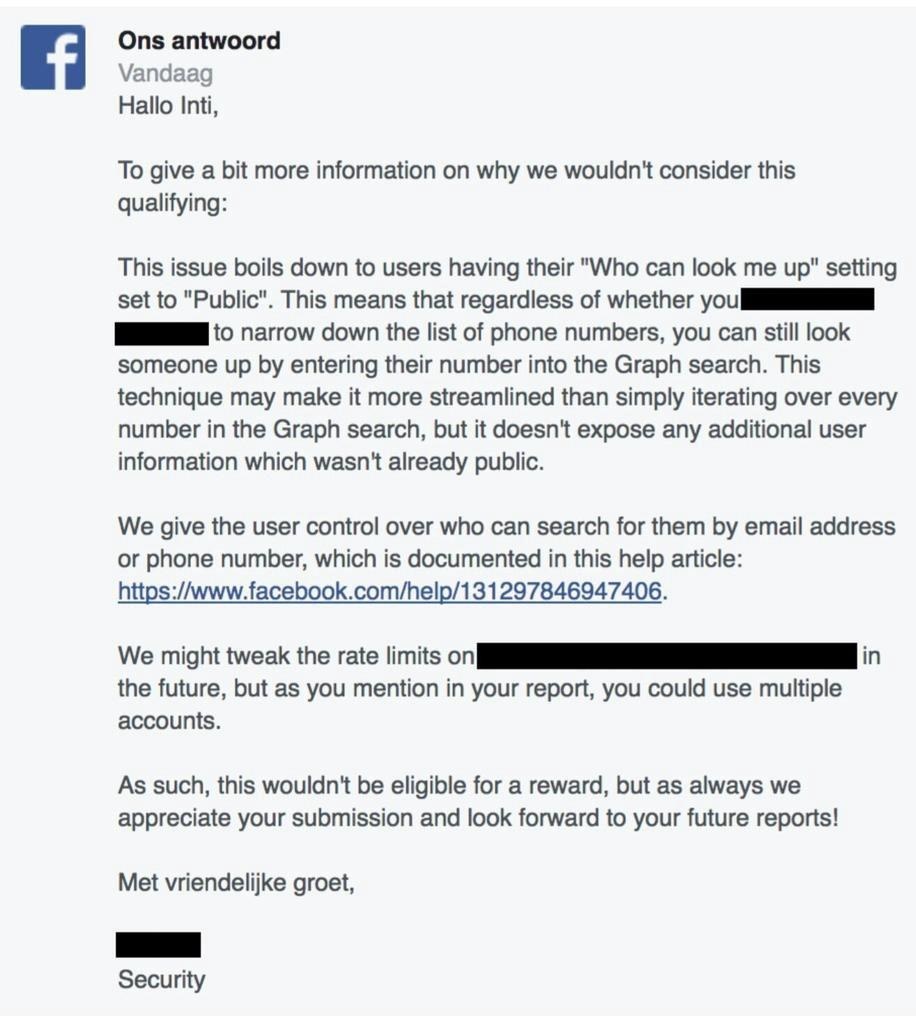
Image by Inti De Ceukelaire/Twitter
Certainly, some people, such as celebrities and politicians, should be more concerned than others about revealing their private number online. However, anyone could potentially have a cyberstalker or hacker target them. Once a hacker has a phone number and your name, they can quickly use open-source intelligence (OSINT) tools that we've covered on Null Byte to grab further public data like occupation, employer, spouse, relationship, any other public info.
A hacker could use the information to further social-engineering attacks by calling you directly. Think of the classic " Microsoft tech support" scam, only the caller trying to trick you knows your name and intimate details of your personal life. Armed with these, it's easy to make the target think the caller is legitimate.

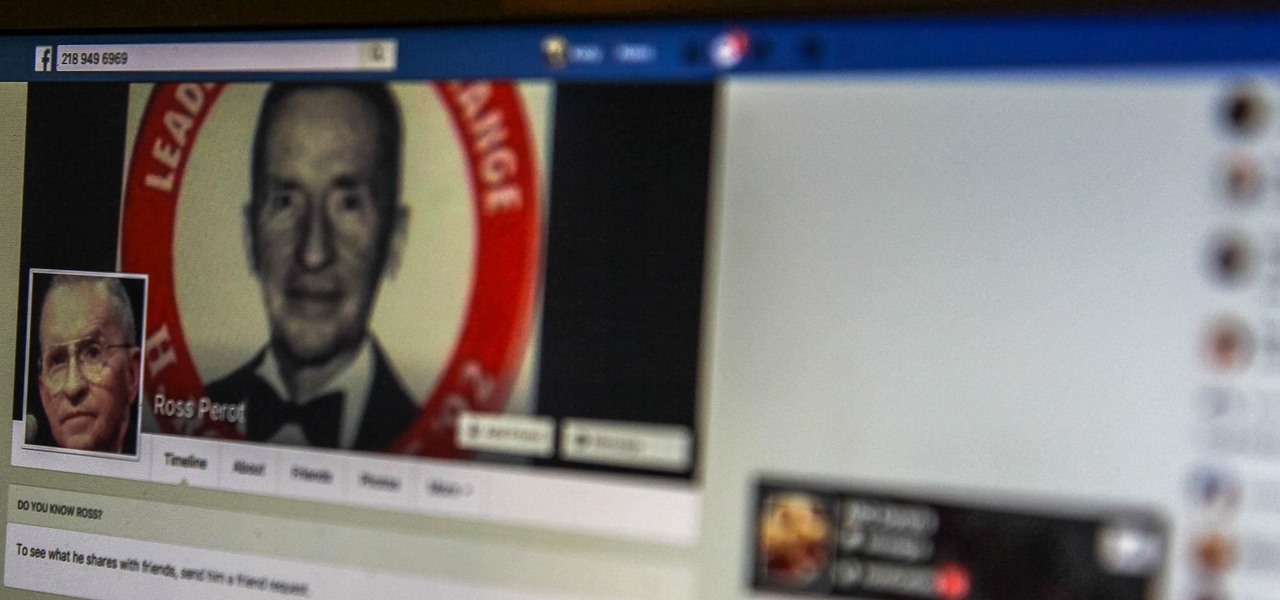
How would a hacker actually go about finding your number? In theory, if they had a lot of time, they could just search all 9,999,999,999 potential numbers until they stumbled upon yours. Clearly, this isn't very efficient, so let's see the right way of doing it. For a practice subject, I'll be using DC Mayor Muriel Bowser (2017) as a random city official. In the examples below, her number was changed to protect her real number.

Step 1Use the Area Code

If you think of a target's phone number as one of all the possible 10-digit US phone numbers, you can quickly see that 10 billion North American phone numbers it far too large a list to effectively search through. Luckily for the hacker, he can cut this down thanks to the North American Numbering Plan (NANP) which lays out the guidelines for phone numbers in the US.
Let's take an example: 234-235-5678. Looking at the NANP, we can see that the first three numbers (234) are the area code, and the plan allows for 2–9 as the first digit and 0-9 for the second and third digits. That information right there eliminates one billion possible numbers from the hacker's list.
The hacker can also quickly take advantage of this if they know or can take an educated guess at where you live, as it's as easy a Google search. By doing this, the hacker can remove a further 9 billion 990 million numbers from the list of potential guesses.
The next three numbers after the area code in our example (235) are the central office prefix. Again, the plan calls for 2–9 for the first digit and 0–9 for both the second and third digits, but with a caveat.
In area codes where the second digit is 1, the third can't also be 1. This yet again removes a large number of phone numbers from the hacker's list. The last four digits of the phone number is the line number, in this case, 5678.
I took the educated guess that the Mayor of DC would have a DC area code, and a hacker could also look up the target's Facebook account and likely find a hometown or the current city the target lives in or works from. Some larger cities like Los Angeles will have multiple area codes within them, but no matter how many "split" area codes there are, it still greatly reduces the hacker's list of possible numbers.

Step 2Get the Last Numbers

Now that I know my target's number is 202-???-????, I want to try and remove as many of those question marks as possible, making it easier to do a Facebook search later on. Thankfully, Facebook has our back and has made this probably the second easiest step, after using the area code. In order to get the last two numbers, we just have to go a few steps into the password reset process.
To do this, the hacker goes to the main Facebook page and clicks "Forgot account" to start the process.
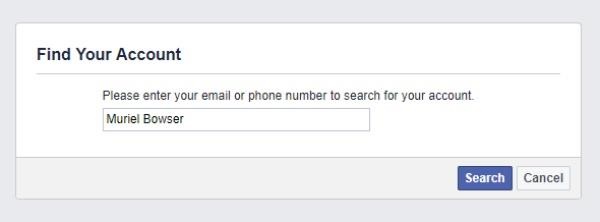
Next, they enter the target's name they have in mind and click the "Search" button.
The hacker is then presented with a list that includes a face picture paired with each matching account that helps them quickly identify their target. There's our target right at the top!
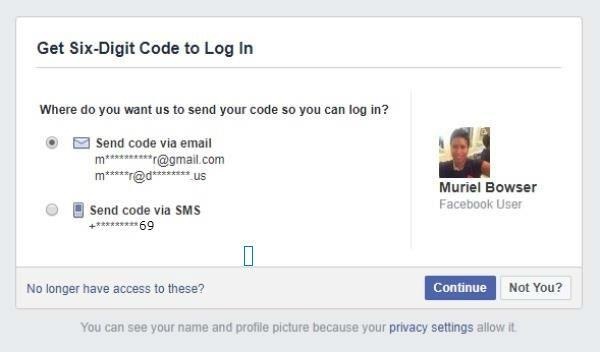
Facebook then kindly provides the hacker the last two digits of the targets number, along with some information about the emails accounts associated with their Facebook account, such as the first and last letter, and sometimes the email domain.
That's as far as the hacker has to go. They don't actually reset the password, and they shouldn't so that the target never receives any kind of notification to tip them off.

Step 3Use Outside Sources

With over 218 million users, PayPal and other services can help add to the information the attacker has collected so far. In this case, if the target is a PayPal user, the hacker can get two additional digits of the phone number we're looking for.
In the picture above, you may have noticed that the first email listed is a Gmail account that starts with "M" and ends with "R."
That's funny, since my targets first name starts with an "M," and her last name ends with an "R." To a hacker, this screams "I used my name as my email!" Suspecting this was the case, I checked it on Gmail by typing it in.
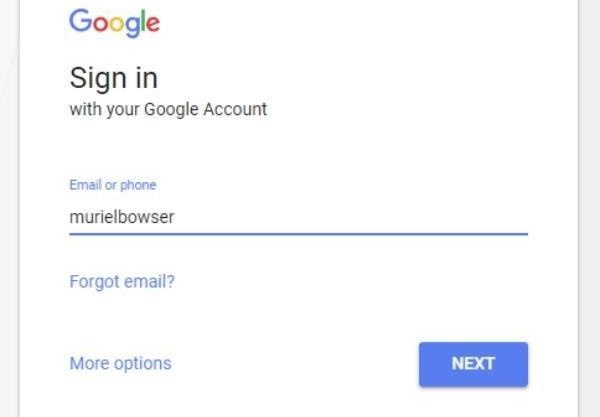
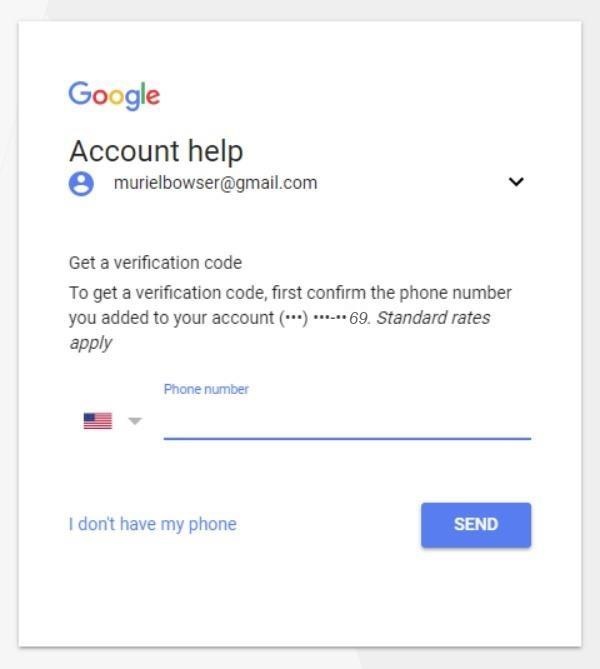
Google accepted it, but that doesn't necessarily mean that it's the target's email. The hacker can check by doing the same password reset trick they pulled with Facebook.
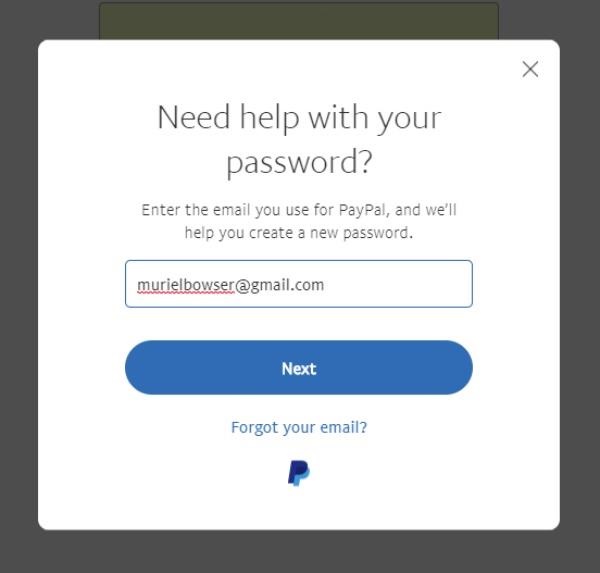
Yep, this account just so happens to have a number that ends in 69. Coincidence? I think not. Now that I have an email to work with, I can jump over to PayPal in a new tab, and once again, use the same password reset trick.
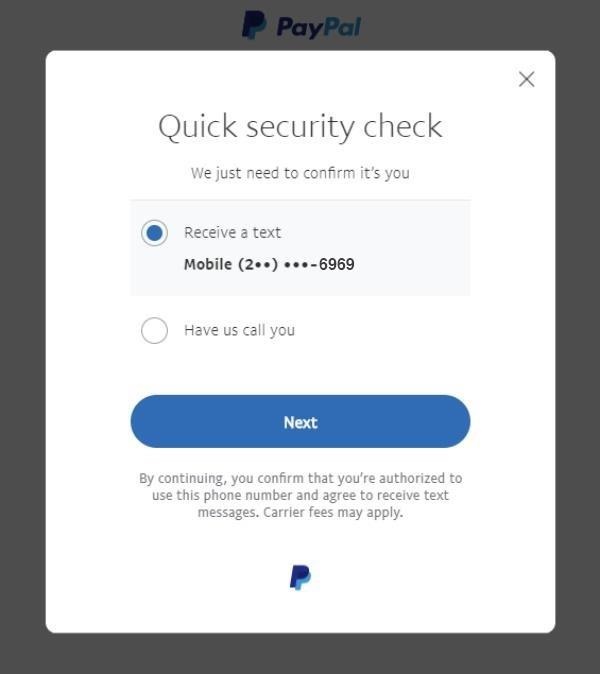
This time, when I get to the password reset screen, I get not only all four digits of the line number, but also the first number of the area code too!
This allows me to be reasonably sure that I'm on the right track with the area code, and verifies my previous work on finding the last few numbers. This means I have the number 202-???-6969 so far. In other words, my list has gone from 10 billion choices to about a thousand in just a few minutes of work.

Step 4Brute-Force It the Smart Way

At this point, a hacker could just start throwing numbers into the Facebook search bar, but that still wouldn't be that efficient. So what does a lazy hacker do? They take advantage of a Facebook feature that allows you to conduct a bracket search.
Facebook allows you to upload lists of contacts in CSV format, and then tells you if they are on Facebook so you can add them as friends. By constructing my own contact list of potential numbers, I can quickly rule out large chunks of wrong numbers.
In this case, I know the number has to be in the range from 202-000-6969 to 202-999-6969. By cutting that in half and creating a list of numbers from 202-000-6969 to 202-500-6969, I can effectively rule out half of my list, as the target will only be in one of the two half lists created. Then, I can upload the list and instantly determine if they are on it or not.
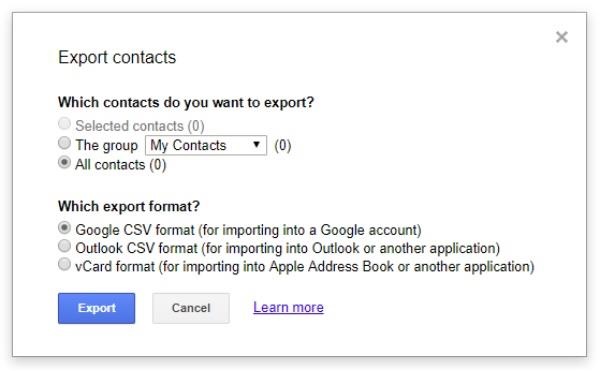
To create this list, I went to Google Contacts and clicked "Export" to get a sample CSV file to work from.
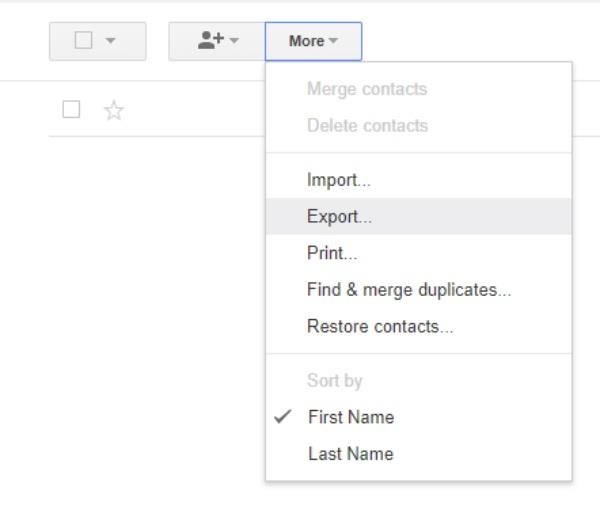
Facebook prefers to accept the list in Google CSV format, so I saved it as such from Google Contacts.
From there, a hacker can open the file in Google Sheets or Excel and change the column formula for the phone numbers to one that will iterate over the numbers they need to check, as seen in the following example.
In the excel formula below, I start by taking the lowest value phone number, in this case, 2020006969, then I add 10,000 to it in order to increase the fifth place digit by 1. This formula will repeat as many times as needed, but we shouldn't do it more than 1,000 times because there are only a thousand numbers in our list to guess. If the target hadn't had a PayPal account to help us derive the third and fourth place digit, then we would be adding 100 to increase the third digit instead.
=(ROW()*10000) +2020006969
From there, it is simple to sign into a Facebook account and go to the Friend Finder feature. Click on the Gmail logo and then "Find Friends."
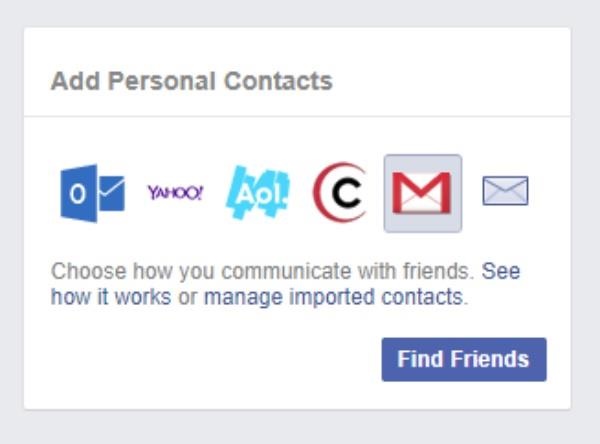
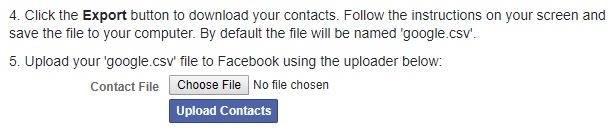
Next, scroll to the bottom of the page and upload your CSV file containing the phone numbers you wish to try.
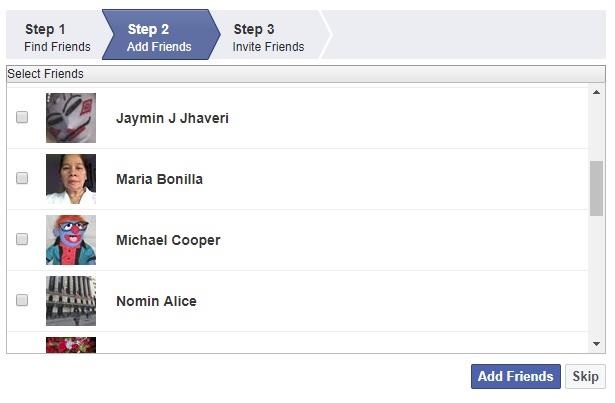
After it's uploaded, Facebook presents the hacker a list of "Friends" to add from the list. They would then search for their target inside that list. My target doesn't seem to be here, so I know they aren't in this half of our batch of numbers.
Next, instead of testing the next 500, I split the next 500 in half and check one of those halves. This is because I already know the target will be on the second list since they weren't in the first half. The hacker can continue searching in this way until the target appears on a phone number list.
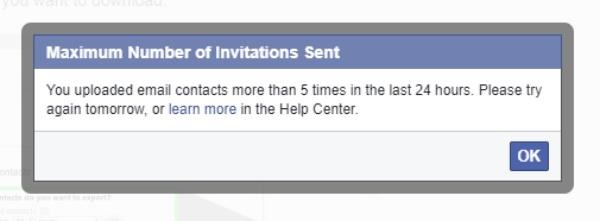
From there on out, the hacker would test smaller and smaller batches of numbers until they have only a handful to test. I stopped when I had it down to about 30 numbers. Obviously, this will take longer if the hacker has less information about the other digits of the phone number to begin with, as they will have a larger number set to search. Facebook will rate-limit the hacker to five attempts per day but they can get around this by signing into another account.

Step 5Test the Last Few Numbers

Once that hacker has it down to a handful of numbers, they can go to the Facebook search bar and type them in one by one. To do so, just type the number into the search bar with no hyphens. If the requests are going too fast, or if they search for too many, Facebook starts to rate-limit them with a CAPTCHA.
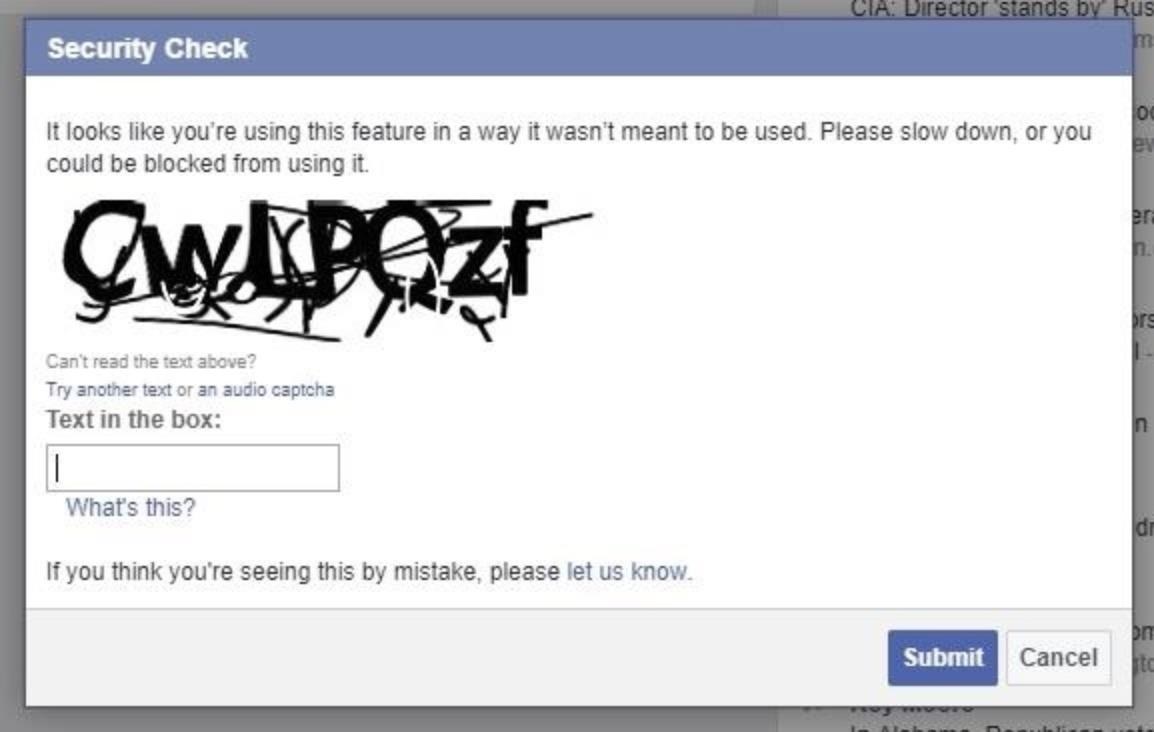
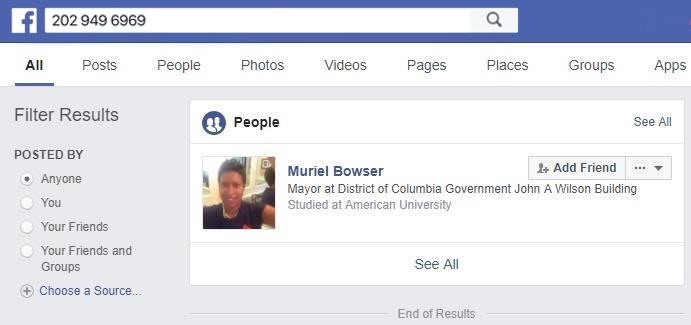
However, that's not much of a defense when the hacker only has 30 numbers to check.
In total, it took me around 30 minutes to an hour to find the target's number, and these same steps could be used on anyone who has their phone connected to Facebook.

Step 6Protect Yourself

The simplest way to protect yourself is to never connect your phone to Facebook. If you still want to use two-factor authentication, Facebook allows you to use a USB U2F device without having to rely on your phone.
If you absolutely must have your phone connected, navigate to Facebook Settings, select "Privacy," then "Who can look you up using the phone number you provided?" Set this option to "Friends." Unfortunately, Facebook doesn't let you set this to "Only me."
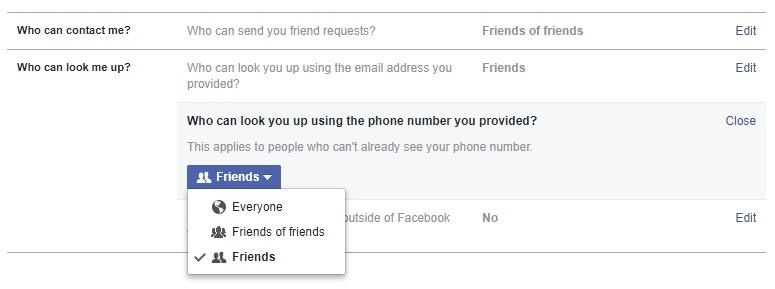
On a mobile device, you would tap on the three-line menu icon, select "Account Settings" (iOS users will have to select "Settings" first), then tap on "Privacy." You'll see the same "Who can look you up" question above where you can change your preferences to "Friends" only.
While this still will not provide absolute protection, it will make the hacker's life much more difficult.
Read More
  • Share This:  
  •  Facebook
  •  Twitter
  •  Google+
  •  Stumble
  •  Digg

How to tell who looks at your facebook profile

 No comments   

With the amount of data that Facebook collects on its users now out in the open, it is only natural for any of us to think that the company is well aware of who visits our pages and profiles, and when. And they do. However, just because Facebook has that data doesn't mean it's willing to share it with just anybody. In fact, Facebook considers this information to be strictly confidential and asks that you report any third-party apps or companies that claim to be able to provide that information.


Can You See Who Viewed Your Facebook Profile?

If you're interested in the company's official stance on the matter, it might prove harder to find than you'd expect. After a lot of searching, we were able to locate a lone help center page that addressed this question directly. Not surprisingly, it was rather confusing and very brief.
No, Facebook doesn't let people track who views their profile. Third-party apps also can't provide this functionality. If you come across an app that claims to offer this ability, please report the app.

Using Third-Party Apps To See Who Viewed Your Profile

Like we said, Facebook's official help center doesn't prove to be very helpful on the matter, beyond simply stating that this functionality is "not provided." Of course, that's quickly followed by an ominous statement that suggests that there are, indeed, third-party apps that claim to offer this service. But are they for real?
Just a simple Google search will show you that there are a number of third-party offerings: Facebook apps, Chrome extensions and Androidapplications, that claim to be able to tell you whenever someone views your Facebook profile. Of course, there is a trade-off. In order to use their services, these companies ask that you provide them with access to your personal profile and private information, in fact, sometimes they even ask for money. It does seem tempting, after all, it's not every day that you are given the opportunity to trick a massive social mediagiant and get away with important information as to who is accessing your social media account and for what reason. The bottom line? Resist!

Is It Safe To Use These Third-Party Apps?

Using a third-party application to circumvent Facebook and find out who's viewing your profile sounds like a tempting offer. However, know that this is not for free. In exchange for letting you use their services, these third-party applications want access to your account, with the intention of using it to use your private information, distribute what most people would consider spam, or even infect your device with malware.
Of course, there is the fact that none of these third-party services can actually deliver what they promise, which is to let you see who views your profile on Facebook. This is all confidential data that Facebook holds on to very closely, and there is simply no backdoor that allows you to go around these restrictions and access this information anyway. Apps and services that claim to offer this functionality are simply here to steal your data, infect you with malware and provide you with fake information that is of no real value.

If you have already installed a third-party Facebook application that claims to let you see who views your profile, know that it is, without a doubt, a scam. The application will continue to have access to your account until you revoke it manually, so be sure to check out how to block access to your account and follow the instructions to clear out any unwanted applications from your Facebook profile.
Read More
  • Share This:  
  •  Facebook
  •  Twitter
  •  Google+
  •  Stumble
  •  Digg

How to add link to facebook page

 No comments   

When promoting your business on Facebook via a business page, it is important to include links back to your website. This enables you to generate more traffic to your website for free. It is important to post these links from your business page, as doing so from a personal page can lead to your account being suspended. Facebook enables you to add a hyperlink to your status updates, comments and notes. When adding a hyperlink, make sure that you adhere to the Facebook guidelines and do not link to illegal or harmful websites.

Status Update Links

Step 1

Navigate to the Facebook website and sign in to your account.

Step 2

Click the down-arrow button at the top of the page and then click the name of your business page in the "Use Facebook As" section.

Step 3

Click "Status" and then click the "What's on Your Mind" text input box.

Step 4

Paste or type the hyperlink you want to add along with a description. A thumbnail and information about the site that you are linking to is automatically placed below the hyperlink. Click the check box next to "No Thumbnail" if you prefer not to use a thumbnail, or click the "X" button to remove the information box completely.

Step 5

Click the "OK" button to post the status update with the hyperlink.

Comment Links

Step 1

Navigate to the Facebook website and sign in to your account.

Step 2

Click the down-arrow button at the top of the page and then click the name of your business page in the "Use Facebook As" section.

Step 3

Scroll down the Timeline and click the "Comment" link below the post to which you want to add the hyperlink. You can comment on posts, photos, videos and notes.

Step 4

Paste or type the hyperlink you want to add along with a description.

Step 5

Press "Enter" to post the comment with the hyperlink. Click "Remove Preview" if you want to post only the hyperlink and not the preview that is automatically generated.

Note Link

Step 1

Navigate to the Facebook website and sign in to your account.

Step 2

Click the down-arrow button at the top of the page and then click the name of your business page in the "Use Facebook As" section.

Step 3

Click "Notes" at the top of the Timeline and then click "Write a Note." Click "+" on an empty box at the top of the Timeline and click "Notes" if it is not visible.

Step 4

Enter a title for your note and then type a description in the "Body" section. Paste or type the hyperlink that you want to add to the note. Use HTML formatting to add the hyperlink to a word or phrase. For example, typing or pasting the URL "http://myexamplesite.com" displays the URL as a hyperlink while typing " Click here to go to my site hides the URL and only displays "Click here to go to my site."

Step 5

Click the "Preview" button to make sure that the hyperlink displays correctly, and then click "Publish" to post the note to Facebook.
Read More
  • Share This:  
  •  Facebook
  •  Twitter
  •  Google+
  •  Stumble
  •  Digg

How to see Who unfriended me in the past

 No comments   


unfriend (Facebook)
In the era of the quantified, commodified “friendship,” there are few slights so keenly felt as the unspoken, unacknowledged unfriend. Now, for better or worse, you can revel in your own rejection: Who Deleted Me, a recently relaunched app for iOS, Android and Google Chrome, tallies in real time all the one-time friends fleeing your Facebook feed.
[How Facebook knows who your friends are, even better than you do]
Using the app is pretty simple, emotional consequences aside: After you download the app or browser extension, log in to Facebook through it and click “show me who” to see the people who have unfriended you, or left Facebook, since you last logged in. (The app doesn’t work retroactively: You can only see your unfriends since you downloaded it.)
Similar tools are also available for Twitter, Tumblr and Instagram: Try Stalkr, Who Unfollowed Me and Unfollowers.com if you really want to feel bad about yourself.

Who Deleted Me in action. (Who Deleted Me)
Seriously, though: What prompts a long-time friend or acquaintance to suddenly lose interest in your updates, as 63 percent of all social networkers say they have, at one point, done? In a 2014 study, Christopher Sibona, a researcher at the University of Colorado at Denver, actually pinpointed the four types of content that are most likely to prompt an unfriend:
  1. Frequent/unimportant posts
  2. Polarizing posts (politics and religion; liberals are, for what it’s worth, more likely to unfriend over political views)
  3. Inappropriate posts (sexist, racist remarks)
  4. Everyday life posts (child, spouse, eating habits, etc.)
That same study found that we’re most likely to unfriend people we know from work, high school or other, mutual friends: In other words, people we don’t actually know that well, and people for whom we’d act a certain, specific way for IRL.
Sociologists have coined the term “context collapse” to describe the jarring experience of seeing an acquaintance’s entire life laid out online, when you generally only see a specific, performed piece. (It can be jarring — even unfriend-worthy! — to say the very least.)
So before you take your unfriend-number to heart, consider Sibona’s conclusions: “The general term of ‘friend’ on social networking sites can be misleading,” he says, because most of the people we connect with on Facebook are not, and were never, actually our friends.
Read More
  • Share This:  
  •  Facebook
  •  Twitter
  •  Google+
  •  Stumble
  •  Digg

How to block person on messenger

 No comments   

After blocking someone on Facebook Messenger, you will appear as "invisible" in their contact feed. The user will no longer be able to see when you are online, and they will no longer be able to call or message you. In addition, Facebook Messenger will notify you each time that you attempt to join a group conversation that involves any of your blocked contacts.

How To Block Someone on Facebook Chat

N.B.Blocking someone on Facebook Messenger is NOT the same thing as blocking somebody on Facebook. Unless you completely block a contact, blocked Messenger contacts will still have access to your Facebook profile and all of its platform functionalities.

Open Facebook Messenger, and search for a conversation with the person who you would like to block.
Tap the small blue exclamation mark displayed at the top-right corner of your screen to display the Details page. Then, tap Block:

Next, toggle theBlock MessagesswitchON:

Your contact is now blocked on Facebook Messenger.
Read More
  • Share This:  
  •  Facebook
  •  Twitter
  •  Google+
  •  Stumble
  •  Digg

How do you delete your twitter account

 No comments   


No matter the reason, you might find your days of tweeting out jokes, favoriting replies, sharing photos of your favorite memes, and retweeting to abandon have come to an end. If that sounds like you and you're looking to delete your Twitter account, here's how you go about it!

Deleting your Twitter account

If you want to delete your Twitter account you'll have to visit Twitter on the web. Twitter doesn't provide a method for deleting your account via its mobile apps.
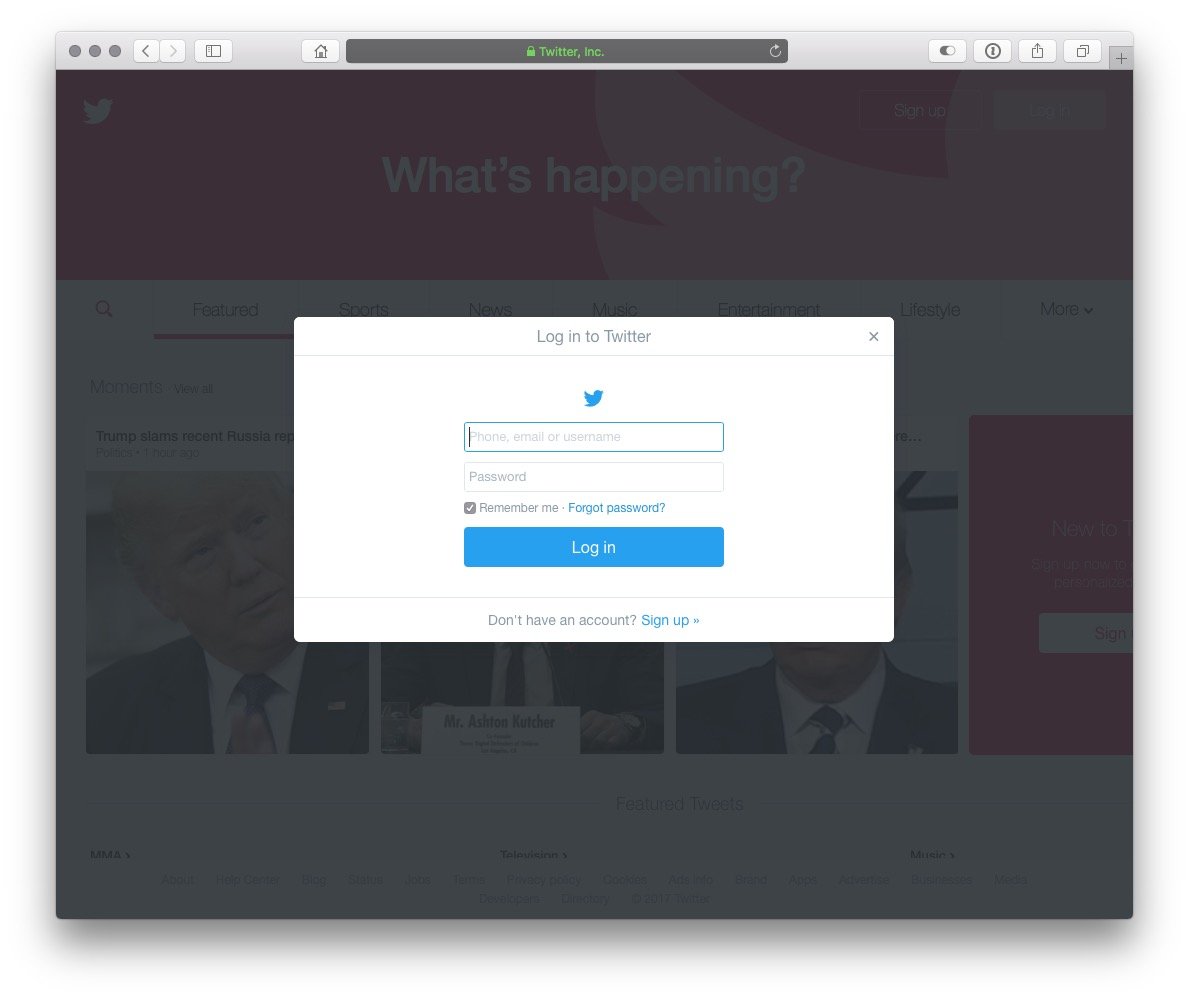
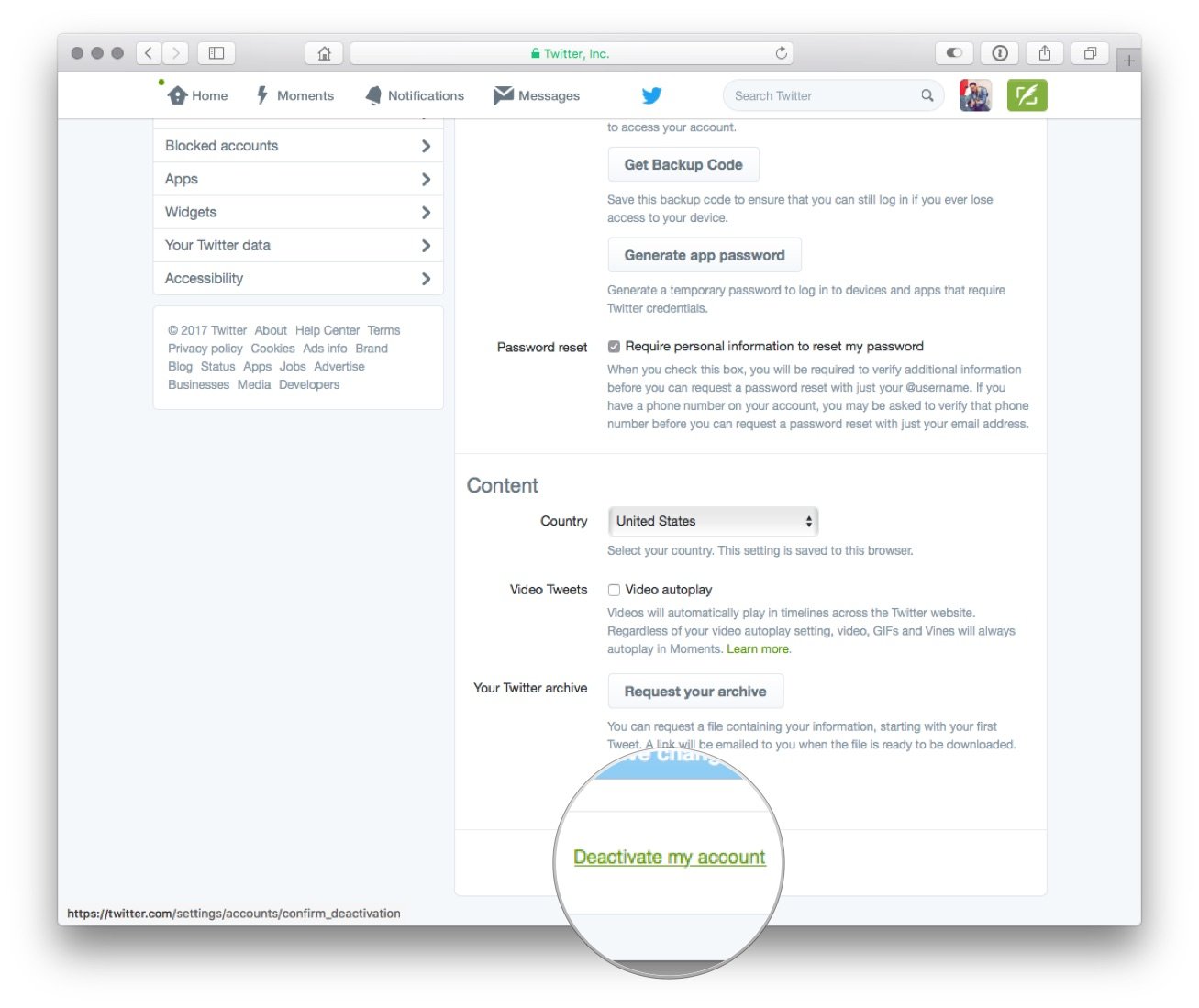
  1. Sign in to Twitter's website on the web.
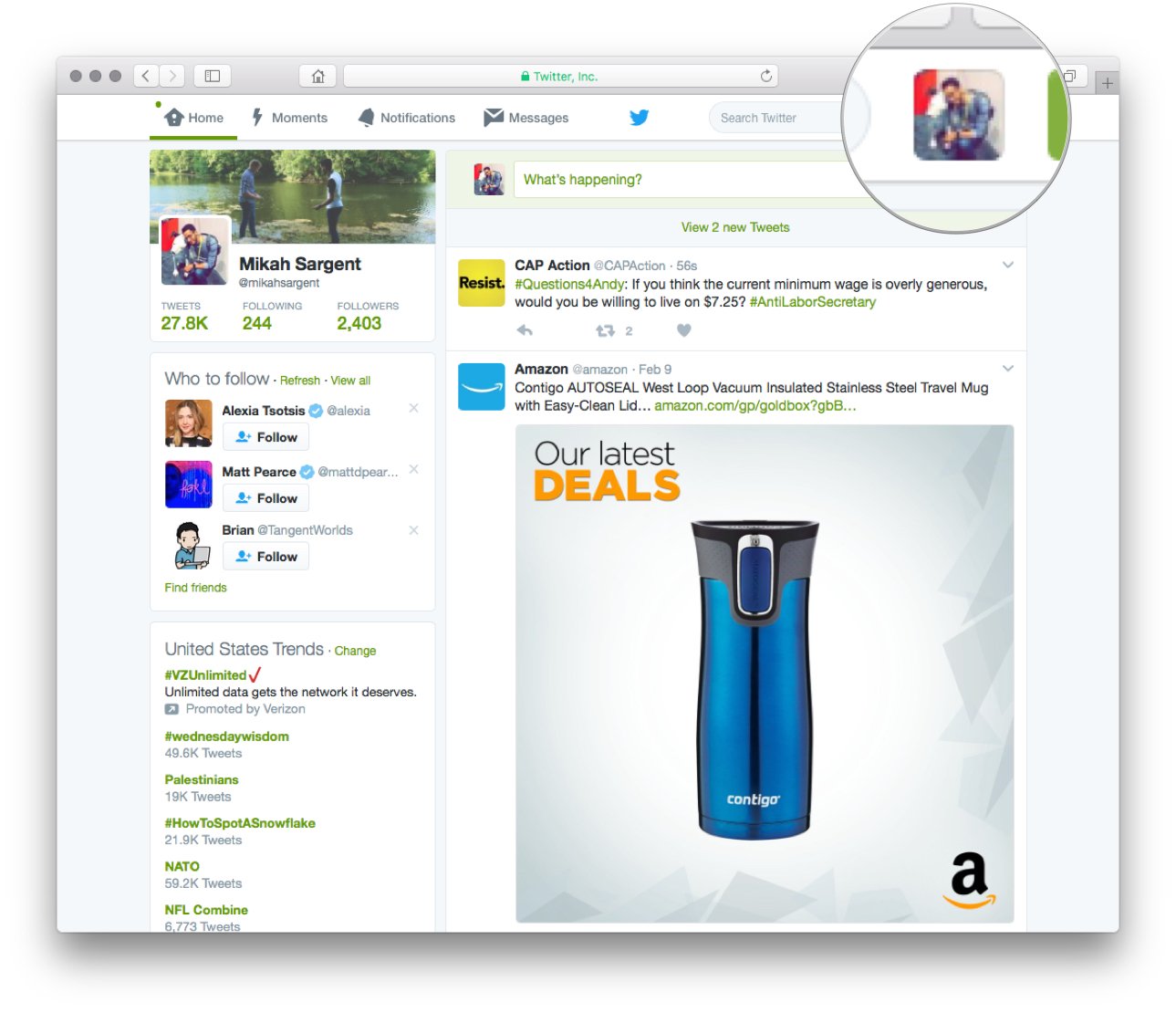
  2. Click on your Twitter avatar at the top of the page.
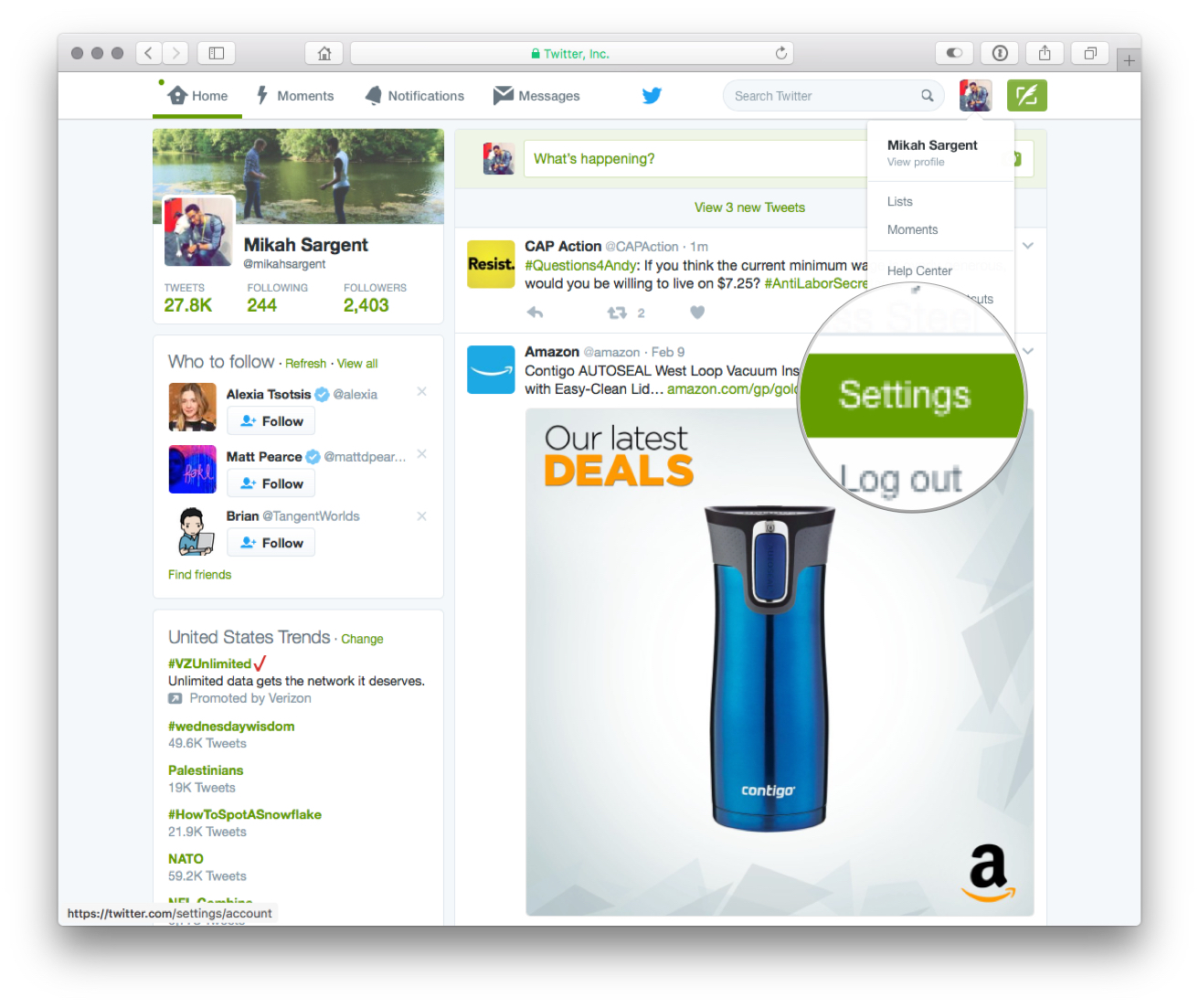
  3. Click Settings and privacy.
  4. Click Deactivate your account at the bottom of the Accountmenu.
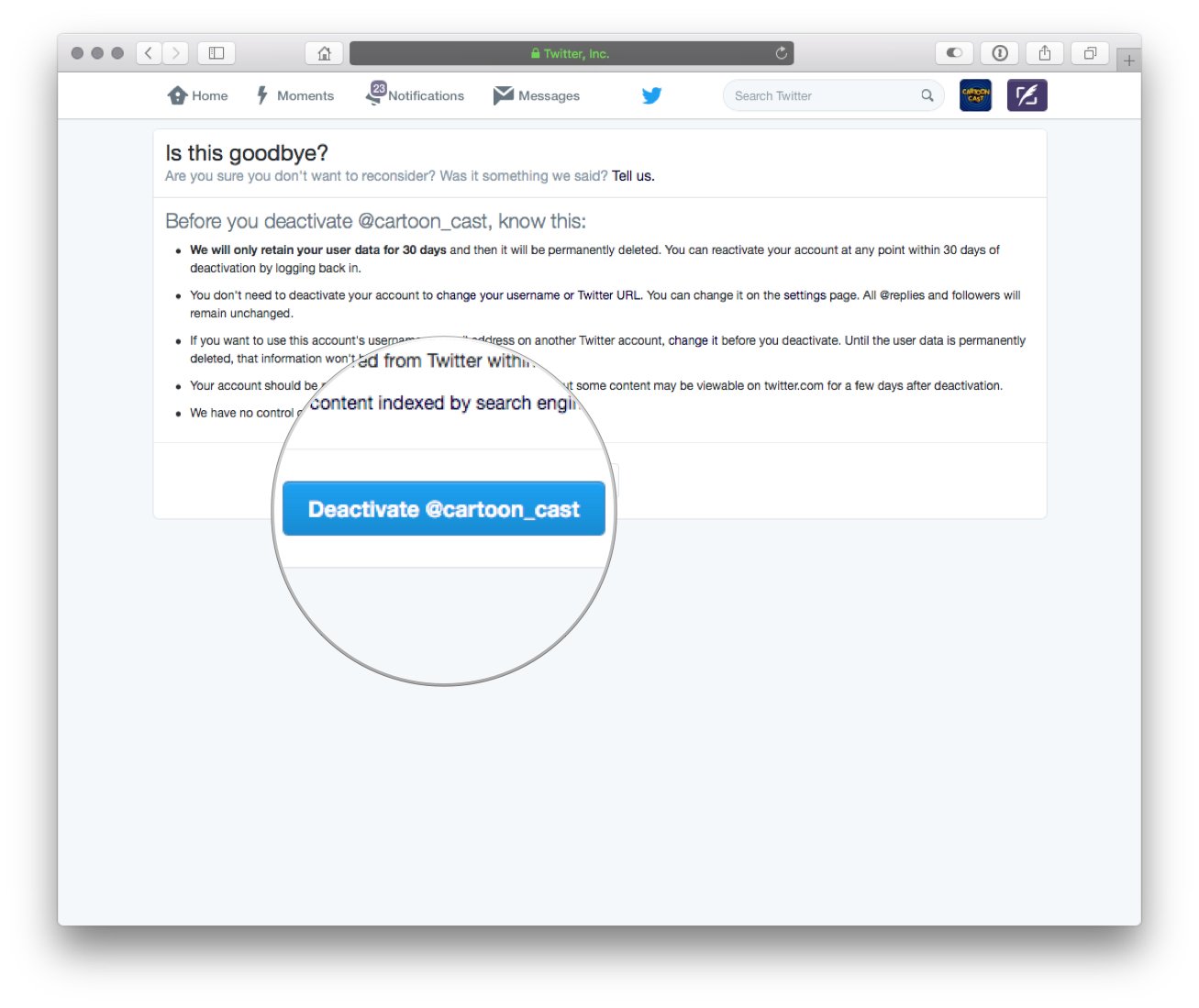
  5. Click Deactivate to confirm you'd like to deactivate your account.
  6. Enter your password to confirm you'd like to deactivate your account.

What you should know

  • Twitter doesn't immediately delete your account when you Deactivate it. The site holds your data for a period of 30 days while it begins to remove your data from its systems.
  • The 30-day period also acts as a grace period of sorts — you're given a chance to reactivate your account if you'd rather not get rid of it. If you ever want to reactivate your account simply log in at any time within the 30-day period.
  • If you're deleting your account for the purpose of purging your tweets from a search engine, it may not work. Search engines index information and don't necessarily "check back in" to see if an account has been deleted.
  • You can find more information about deactivating — and reactivating — your Twitter account on Twitter's support website.
Read More
  • Share This:  
  •  Facebook
  •  Twitter
  •  Google+
  •  Stumble
  •  Digg

How do you cancel your facebook account

 No comments   

Recent events might have you contemplating a break from Facebook. That's not an option for everyone; in that case, just tighten up your account settings. But if having your data mined for political purposes without your permission sketches you out, there are ways to extricate yourself from the massive social network.
If you're ready for a social media break, here's how to delete Facebook.

Deactivating

Facebook gives you two options: two options: deactivate or delete
The first couldn't be easier. On the desktop, click the drop-down menu at the top-right of your screen and select Settings. Click General on the top left, Edit next to "Manage Account." Scroll down and you'll see a "Deactivate My Account" link at the bottom. (Here's the direct link to use while logged in.)
If you're on your mobile device, such as using Facebook for iOS, similarly go to Settings > Account Settings > General > Manage Account > Deactivate.
Delete Facebook
Facebook doesn't take this lightly—it'll do whatever it can to keep you around, including emotional blackmail about how much your friends will miss you.
As such, "Deactivation" is not the same as leaving Facebook. Yes, your timeline will disappear, you won't have access to the site or your account via mobile apps, friends can't post or contact you, and you'll lose access to all those third-party services that use (or require) Facebook for login. But Facebook does not delete the account. Why? So you can reactivate it later.
Just in case that expected re-activation isn't in your future, you should download a copy of all your data on Facebook—posts, photos, videos, chats, etc.—from the settings menu (under "General"). What you find might surprise you, as our Neil Rubenking found out.

Account Deletion

To fully delete your Facebook account forever and ever, go to the Delete My Account page at facebook.com/help/delete_account. Just be aware that, per the Facebook data use policy, "after you remove information from your profile or delete your account, copies of that information may remain viewable elsewhere to the extent it has been shared with others, it was otherwise distributed pursuant to your privacy settings, or it was copied or stored by other users."
Translation: if you wrote a comment on a friend's status update or photo, it will remain even after you delete your own profile. Some of your posts and pictures may hang around for as long as 90 days after deletion, as well, though just on Facebook servers, not live on the site.

Deletion on Behalf of Others

If you want to notify Facebook about a user you know is under 13, you can report the account, you narc. If Facebook can "reasonably verify" the account is used by someone underage—Facebook bans kids under 13 to comply with federal law—it will delete the account instantly, without informing anyone.
There's a separate form to request removal of accounts for people who are medically incapacitated and thus unable to use Facebook. For this to work, the requester must prove they are the guardian of the person in question (such as by power of attorney) as well as offer an official note from a doctor or medical facility that spells out the incapacitation. Redact any info necessary to keep some privacy, such as medical account numbers, addresses, etc.
If a user has passed away, a legacy contact—a Facebook friend or relative who was designated by the account owner before they died—can get access to that person's timeline, once approved by Facebook. The legacy contact may need to provide a link to an obituary or other documentation such as a death certificate. Facebook will "memorialize" the page so the deceased timeline lives on (under control of the legacy contact, who can't post as you), or if preferred, remove it.
Facebook Legacy Contact
Designate a specific legacy contact person to handle your account after your passing. You can find that under Settings > General > Manage Account > Your Legacy Contact. Once you set one up, you'll get a notification every year from Facebook to double check that the contact should stay the same, unless you opt out of that. You can also take the extra step of making sure that after you die, if the legacy contact does report you to Facebook as deceased, your account gets deleted (even if the legacy contact wants the timeline to be memorialized).
Read More
  • Share This:  
  •  Facebook
  •  Twitter
  •  Google+
  •  Stumble
  •  Digg
Newer Posts Older Posts Home

Blog Archive

  • ▼  2019 (502)
    • ▼  July (5)
      • ▼  Jul 08 (2)
        • Selling Things On Facebook - Sell Items On Faceboo...
        • Marketplace App For Facebook - How does Facebook ...
      • ►  Jul 07 (2)
      • ►  Jul 06 (1)
    • ►  February (368)
      • ►  Feb 12 (33)
      • ►  Feb 11 (21)
      • ►  Feb 09 (37)
      • ►  Feb 08 (40)
      • ►  Feb 07 (45)
      • ►  Feb 06 (40)
      • ►  Feb 05 (23)
      • ►  Feb 04 (49)
      • ►  Feb 02 (25)
      • ►  Feb 01 (55)
    • ►  January (129)
      • ►  Jan 31 (78)
      • ►  Jan 30 (20)
      • ►  Jan 29 (11)
      • ►  Jan 20 (4)
      • ►  Jan 19 (3)
      • ►  Jan 18 (4)
      • ►  Jan 17 (5)
      • ►  Jan 16 (1)
      • ►  Jan 12 (1)
      • ►  Jan 11 (1)
      • ►  Jan 10 (1)
  • ►  2018 (2464)
    • ►  November (64)
      • ►  Nov 25 (4)
      • ►  Nov 24 (4)
      • ►  Nov 23 (7)
      • ►  Nov 22 (9)
      • ►  Nov 21 (11)
      • ►  Nov 19 (14)
      • ►  Nov 15 (7)
      • ►  Nov 03 (6)
      • ►  Nov 01 (2)
    • ►  October (178)
      • ►  Oct 31 (9)
      • ►  Oct 30 (1)
      • ►  Oct 26 (1)
      • ►  Oct 24 (16)
      • ►  Oct 23 (21)
      • ►  Oct 22 (26)
      • ►  Oct 19 (5)
      • ►  Oct 16 (50)
      • ►  Oct 15 (36)
      • ►  Oct 14 (12)
      • ►  Oct 13 (1)
    • ►  September (770)
      • ►  Sep 27 (58)
      • ►  Sep 26 (50)
      • ►  Sep 25 (70)
      • ►  Sep 24 (70)
      • ►  Sep 20 (50)
      • ►  Sep 19 (79)
      • ►  Sep 18 (50)
      • ►  Sep 17 (43)
      • ►  Sep 14 (81)
      • ►  Sep 13 (39)
      • ►  Sep 12 (101)
      • ►  Sep 11 (69)
      • ►  Sep 10 (9)
      • ►  Sep 09 (1)
    • ►  June (215)
      • ►  Jun 07 (13)
      • ►  Jun 06 (5)
      • ►  Jun 05 (48)
      • ►  Jun 04 (49)
      • ►  Jun 03 (50)
      • ►  Jun 02 (50)
    • ►  May (1205)
      • ►  May 30 (50)
      • ►  May 29 (50)
      • ►  May 28 (43)
      • ►  May 26 (50)
      • ►  May 25 (50)
      • ►  May 24 (50)
      • ►  May 23 (50)
      • ►  May 21 (50)
      • ►  May 20 (100)
      • ►  May 18 (92)
      • ►  May 17 (98)
      • ►  May 16 (93)
      • ►  May 15 (25)
      • ►  May 14 (25)
      • ►  May 13 (90)
      • ►  May 12 (25)
      • ►  May 11 (50)
      • ►  May 09 (25)
      • ►  May 08 (25)
      • ►  May 07 (32)
      • ►  May 06 (21)
      • ►  May 05 (18)
      • ►  May 04 (25)
      • ►  May 03 (18)
      • ►  May 02 (25)
      • ►  May 01 (25)
    • ►  April (26)
      • ►  Apr 12 (25)
      • ►  Apr 10 (1)
    • ►  March (6)
      • ►  Mar 26 (6)

Search

Copyright © Make Over Arena